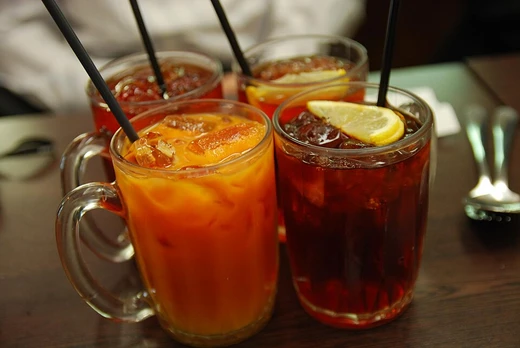
Tea (meal)
A meal of food and tea, popular in Britain and Commonwealth countries.

Tea is an umbrella term for several different meals consisting of food sometimes accompanied by tea to drink. The English writer Isabella Beeton, whose books on home economics were widely read in the 19th century, describes meals of various kinds and provides menus for the 'old-fashioned tea', the 'at-home tea', the 'family tea', and the 'high tea'. Teatime is the time at which this meal is usually eaten, which is mid-afternoon to early evening. Tea as a meal is associated with the United Kingdom and some Commonwealth countries.
- type
- Meal
- associated_region
- United Kingdom and some Commonwealth countries
- popularized_by
- Anna Russell, Duchess of Bedford (1830s–1840s)
- common_elements
- Tea, cakes, scones, bread and jam, sandwiches
- variants
- Afternoon tea, high tea, low tea, family tea, old-fashioned tea, at-home tea
Lore & Background
The custom of drinking tea in the afternoon may have existed from the late 17th century, but tea as a meal dates to the late 18th or early 19th centuries. An early French reference to 'afternoon tea' was made by Madame de Sévigné, who used the term thé de cinq heures in her letters. The timing of the tea meal has moved over the centuries in response to the migration of the main meal, dinner. Until the late 18th century dinner was eaten at what is now called 'lunchtime', or in the early afternoon. At first, the 'tea' meal was often in the early evening, some three or four hours after mid-day dinner; another version was even later, after a supper and before bed.
Reader's Guide
Anna Russell, the Duchess of Bedford, is commonly cited as the originator of the meal of afternoon tea. According to the story, at some time in the 1830s or 1840s, she requested a collation of tea and snacks be sent up to her room between the mid-day and evening meals, as the aristocracy then took their evening meal no earlier than 19:30 or 20:00. She later turned this personal habit into an opportunity for social gathering. However, her role is a matter of controversy: one theory claims afternoon tea as a meal predates her birth, and that meal timings were already in transition; another argues she codified an informal custom, establishing a defined etiquette, menu, and ritual. The custom first spread among the aristocracy, then by the 1860s–1870s to the middle class. Afternoon tea, also known as 'low tea', became popular among upper and middle classes, while the working class adopted 'high tea', a heartier meal taken around the same time. By the end of the 19th century, tea as a meal had become established among all social classes. Afternoon tea receptions were considered the least formal, most friendly entertainments at home. Guests were not expected to stay long—half an hour of pleasant conversation was sufficient.
Did You Know?
- Anna Russell, the Duchess of Bedford, is commonly cited as the originator of afternoon tea, though her role is a matter of controversy.
- By the 1860s–1870s, afternoon tea had spread from the aristocracy to the middle class.
Frequently Asked Questions
What is Tea (meal)?
Tea (meal) is an umbrella term for a range of light meals centered around food served alongside a cup of tea. It is most closely tied to the United Kingdom and several Commonwealth nations, and is typically enjoyed between mid-afternoon and early evening.
Who is credited with popularizing Tea (meal)?
Anna Russell, the Duchess of Bedford, is widely credited with establishing the afternoon tea habit during the 1830s and 1840s. Her practice of taking a small evening snack to bridge the long gap between lunch and dinner became a social tradition that spread through British high society.
What foods are commonly part of Tea (meal)?
A typical spread includes tea itself along with cakes, scones, bread with jam, and small sandwiches. The exact selection shifts depending on which variant of the meal is being served.
What are the main variants of Tea (meal)?
Recognized forms include afternoon tea, high tea, low tea, family tea, old-fashioned tea, and at-home tea. Each variant carries its own menu conventions and social context, as catalogued in 19th-century home-economics guides such as Isabella Beeton's cookbooks.
More in Beverages & Drink Culture 1-18
Spotted an error? Know more?
This is a living reference — every entry is fact-audited, and reader corrections feed straight into our audit queue. Suggest an edit · See this site's audit record